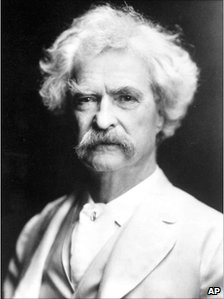
He had it in the Nineteenth Century
The last few weeks I have been having a profound case of déjà vu, watching Creepy and Dopey and Wifty sashay across the country.
There was the sense of having lived this before – or read it somewhere in my younger days. It was the chubby one, who calls himself Newt. He portrays himself as an intellectual who sees the future, but he carries a whiff of Nineteenth-Century America. Then it hit me. Samuel Clemens. Mark Twain. The Adventures of Huckleberry Finn. That’s where I think I first encountered Newt. I opened the book and skimmed through it (electronically) and there from Chapter 19 through 33 were two poseurs who worked the Mississippi, claiming to be a king and a duke. Down on their royal luck, they would perform Shakespeare “wherever the people are as green as the money,” to quote another heartland American hustler, the Music Man. The king and the duke overwhelm Huck and Jim with their pretentions, using big words and scraps of history, but they also refer to people as “country jakes” and “greenhorns” and “flatheads.” It takes a while for Huck and Jim to sort out the king and the duke, but eventually they do. Well, anyways, I doan' hanker for no mo' un um, Huck. Dese is all I kin stan'." "It's the way I feel, too, Jim. But we've got them on our hands, and we got to remember what they are, and make allowances. Sometimes I wish we could hear of a country that's out of kings." Twain, who had such a keen ear for the intellectual bully, could easily have written in Newt as the third scalawag. And this most American character, born in Harrisburg Hospital smack alongside the Susquehanna, would have been right at home on the Mississippi. How long would it have taken Huck and Jim to scope out Newt? Without trying to imitate the speech patterns Twain gave them, here’s how I imagine the vagabonds, sizing up Newt: “As Descartes said after defeating the Normans on the playing fields of Eton, ‘Give me liberty – or give me $5,’” Newt announced. “What’s he saying?” Jim asked. “Beats me,” I said. “This is just what the Founding Fathers meant when they came over on the Mayflower,” Newt continued. “They all came over here together to discover America so they could turn it over to the historians.” “Huck, I don’t understand a word he’s saying,” Jim whispered. “Neither do I.” Finally Newt slowed down because he said he was getting powerful hungry and couldn’t educate us any more until we passed the hat and collected enough for a meal, and maybe some jewelry he could ship home. “He wants money so he’ll talk some more?” Jim asked. “Apparently,” I said. “How’s about we pay him not to talk?” Jim said. Perhaps a fictional version of Newt would escape the fate of the duke and the king, who are tarred and feathered, as Huck and Jim watch. In these kinder, gentler times, it should be quite enough to let the man talk a bit longer.
Hansen Alexander
1/15/2012 03:01:16 am
George,
George Vecsey
1/15/2012 04:49:21 am
Thanks, man. I surely did not want to imitate the dialogue he wrote, particularly for Jim, although Twain wanted the reader to see Jim as often the wisest person in the room. Comments are closed.
|