Picture
What if the Gambling Den Tapped Out?
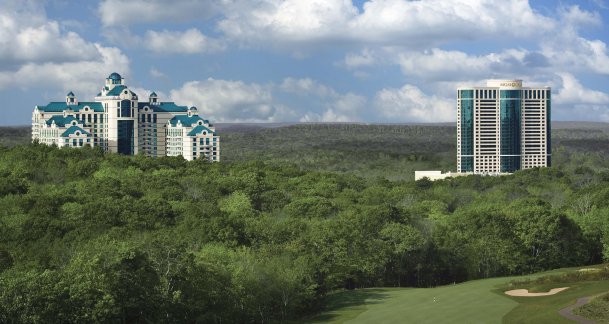
Some numbers catch your attention. Last Sunday I read in The New York Times that the vertical gambling den in Connecticut known as Foxwoods is currently $2.3-billion in debt. Who knew?

I took this news personally. Every time my wife and I visit her family’s cemetery near Ledyard, we cannot help but notice the Foxwoods towers looming over the countryside like a gigantic mold spoor.

My wife’s cousin, Faith, who died way too young, is buried in the family plot, and so is her grandmother, who was something of a psychic, and her grandfather, a little old Yankee railroad worker, who was such easy company.

My wife’s ancestors found their way into the hills behind Mystic not long after the Pilgrims landed further up the coast.

You could say that the Pequot were there first, and that is certainly true, but nearly four centuries count for something. Now whatever passes for the dispersed Pequot run the gambling complex in the eastern part of the state. Cars and buses zoom just a few miles from hamlets where my wife’s people led such ordered lives.

My wife, who spent her early childhood swimming in Long Island Sound or skating on frozen coastal ponds, can remember visiting family farms in the hills, picking blueberries.  We are not of that inland place. Whenever we pay our respects to cousin Faith, we gun the engine toward Boston or New York.

I will admit that when we make this detour, I have been known to say an inchoate prayer for the de-profanation of the Connecticut hills. I’ve seen gambling up close. Seen what it does. Like Woody Allen turning into a Hasid when he visits Annie Hall’s home in rural Wisconsin, when I spot that blight against the Connecticut sky, for at least the next few minutes I turn into a Puritan.  
                        *          *          *
The poet Laura Vecsey walks her own shoreline:

http://www.lauravecsey.com/pilgrims-are-made-not-born.html


Comments

Brian Savin
03/23/2012 1:08pm

If only ten thousand people didn't need the jobs and would be made pilgrims by the demise of Gomorrah.

Reply
Brian Savin
03/23/2012 1:11pm

I meant "wouldn't" -- because they will.

Reply
Alan Rubin
03/25/2012 11:27am

George, so many of your posts bring back old memories. My wife and I lived for awhile in Norwich, CT in the early 60's shortly after we were married. I worked for Arwood Investment Casting Company in Groton. I had an eighteen mile commute to work, but I had a choice of two routes each being on opposite side of the Thames River. Although I did not like he traffic over the New London Bridge, I usually chose rote 32 on the eastern side as it was more scenic.

Your comments on the beauty and serenity of rural life in CT, as well as New England in general, only scratch the surface.

When I first learned about Foxwoods and how massive it was, I thought about the serene open fields that I routinely passed to and from work. I often wondered about who lived in the lone trailer not far from the road.

The buying group that my business belonged to started having their annual meeting at Foxwoods about ten years ago. My first trip there was on a beautiful September Sunday. When I turned of Rt 95 onto Rt 32, I was filled with memories of our time living the area including having seafood in the Portuguese fishing village of Old Stonington and watching the annual blessing of the fishing fleet.

Suddenly, almost as if it was a mirage, Foxwoods appeared in the distance. I pulled over to take it all in as I never expected anything so massive. What an insult to a rural way of life. Progress inevitably comes to most communities in time, but was something of this scale necessary?

I'm a native of NYC and have spent most of my adult life living and working in Manhattan. However, I also had lived and worked in small communities and have come to appreciate their value. That is why we retired to Hinsdale, MA in the Berkshires.

There are many questions that are raised about casino gambling in general and why is Foxwoods so deeply in debt in particular. What is the true impact of gambling casinos on the local economy? Is it only the operators who gain? True, they do generate a significant number of jobs, but what about the rest of the community. Also, much of their revenue is extracted from members of the local community that can better utilize the money.

Massachusetts is a very progressive and well run state, but I do not agree with their approving three gambling casinos this year. Time will tell if these casinos will deliver to the state and the local communities anything near what has been promised.

Reply
George Vecsey
03/25/2012 9:33pm

Alan and Brian, thank you.
I appreciate the jobs that are engendered particularly from the food and entertainment and lodging end, but I have an issue with gambling, particularly when lotteries are used as a panacea for taxes or gambling used as a substitute for more socially redeeming industries. Foxwoods in CT reminds me of the strip mines in Appalachia, another part of the country I love -- not sure they are worth it, in the long run. GV

Reply
Andy Tansey
03/31/2012 7:09am

Mr. Vecsey, this is just another good discussion that gives pause to more contemplative reasons to reconsider the development of casinos in beautiful places. Although I have been on that beaten path between New Haven and Providence many times, whether heading to Foxboro or Boston or the Cape from Long Island, I have gotten off the beaten path into that dignified countryside only a few times. It brings one back. The looming casino reminds me of a decommissioned nuclear plant we once stumbled upon after a wrong turn in rural Alabama - more than a mere man-made oddity surrounded by apparently unspoiled nature, the sense of some awesome dark force lurking invisibly.

My focus tends to be on Maine because of some work there, and a recent edition of Maine Biz cites the increase in casino revenues there, perhaps as a corollary of the struggles in other Gomorrahs.

I agree with Mr. Rubin's politely expressed sentiment, "Also, much of their revenue is extracted from members of the local community that can better utilize the money," but would also insert "and not-so-local." The American economy seems to become more and more "derivative," by which I mean further and further removed from some tangible product. So many of us make a buck not by making steel but, for example, by advising heirs of the fortunes of those who did. The gambling economy (including Lotto - a colleague called it the tax on people bad at math) is one of the more dishonorable examples of this trend, in light of too many of the folks from whom the revenue is derived and who cannot afford it.

There was an article in the Sports(!) section of the Times a few weeks ago about Christian card-counters, some of whom cited conscience issues about seeking an advantage disapproved by the gambling bosses. Using skill to take advantage of the houses with odds stacked against people who can't afford but also can't resist spending their last hope on a bet - what's wrong with that?

Thanks for giving me reason for more placid contemplation of this distasteful dilemma.

Ever respectfully,
Andy Tansey

Reply
George Vecsey
03/31/2012 10:25am

Dear Andy Tansey: thanks for the reasoned note. I have never understood why a mental skill like counting was not allowed.
I guess that;s why the gambling dens are happy when aged customers are wheeled off buses to drop a few dollars.

Bart Giamatti used to rail against gambling being used to take the place of taxes. He thought it was not only a temptation for the poor and the compulsive but was also an evasion of civic responsibility, to take gambling money for the public good. I didn't always agree with him, but thought he was spot on about that moral issue.
thanks for caring, GV

Reply
Alan Rubin
04/01/2012 1:18pm

The following is an article that appeared in today's Berkshire Eagle. It is a good explanation of the impact of lotteries in Mass and that the coming casinos are not going to makes things better.

Gambling and sin taxes are easy ways for politicians to avoid the difficult decisions on how to stimulate the economy. Granted, solutions are not easy!!

--------------------------------------------------------------------------

Dwindling Lottery Dollars 'Lifeline' for Cities, Towns

By Beverly Ford, New England Center for Investigative Reporting,

Sunday April 1, 2012

Massachusetts cities and towns are increasingly relying on a thinning pool of lottery revenues to bridge their budget gaps, deepening the shaky financial footing of many poorer communities that rely heavily on state aid, an analysis of lottery and local aid data by the New England Center for Investigative Reporting found.


State aid data from the past three fiscal years show that many cities and towns are receiving dwindling amounts of "Unrestricted General Gov ernment Aid" -- a pot of money, largely made up of lottery revenues, that local municipal officials use to shore up deficits in police, fire, education and other municipal budgets.


In Lynn, where 2010 census data show that nearly 20 percent of residents live in poverty, two years of cuts in "unrestricted aid" totaling more than $2 million have delayed paving projects and municipal building repairs and required the careful scrutiny of all nonsalary spending, said Mayor Judith Flanagan Kennedy. The city, however, came out of the cutbacks without any personnel layoffs.


The town of Adams wasn’t so lucky.


When it lost $225,682 in "unrestricted aid" between 2010 and 2012, the impact was even more severe. The drop in funds meant 10 positions were cut, including police officers and public works employees. Staff and programs were also cut at the regional school system to which Adams belongs.


"For communities like us that are more reliant on state aid, it’s made the budget very challenging," said Jonathan Butler, the town’s administrator.


Still, when it comes to state "unrestricted aid," Bay State communities are betting the house on the Massachusetts Lottery. That’s because almost all unrestricted local aid now comes from Keno and lottery sales, a NECIR analysis found.


"In terms of unrestricted aid, the lottery is it," said Geoffrey Beckwith, executive director of the Massachusetts Municipal Association, a nonpartisan organization that provides advocacy, training and other services to Massachusetts’ 351 cities and towns. Beckwith said the lottery has been "a lifeline" for communities, giving them money that can be used for any purpose, whether that be education, salaries or public works projects. Now, however, that lifeline is growing thin.


Bay State communities today receive about $400 million less from the state in unrestricted aid than they did in 2007, according to data provided by the Massachusetts Municipal Association. Five years of cutbacks in state contributions now means that almost all of that unrestricted aid money is coming from lottery dollars.


Things were different just a few years ago.


Between fiscal 2007 and 2009, the state added more than $300 million to that fund when the lottery fell short of revenues projected by the Legislature. Between $343 million and $379 million was also doled out to 159 cities and towns those same years as "additional assistance" to fund municipal projects, according to figures provided by the Lottery, the State Department of Revenue and the Division of Administration and Finance.


In 2010 when the lottery and additional assistance funds were merged into the unrestricted state aid fund, or UGGA, the state contributed about $122 million from the general fund to shore up that account, the figures show. In 2011, that number was cut to $97 million. One year later, in 2012, the state is expecting to contribute no more than $32 million, with the remainder -- about $802 million -- to come from the lottery, according to the figures.


Even as the state was cutting back on its contributions, lottery funds were slowly declining. In 2008, the lottery contributed $822 million to the fund, one of its largest contributions ever, the financial data provided by the lottery and Administration and Finance shows.


By 2011, the pool of lottery money contributed to that unrestricted state aid fund was $802 million, about $20 million less than the lottery contributed just three years earlier, those figures show.


"The problem with the lottery is that it is all communities have left," said Beckwith, who advocates a better revenue sharing process to more equitably distribute state aid funds.


A lingering recession, however, has made that difficult. With lottery sales languishing at around $4.4 billion since 2009 and unrestricted local aid dollars drying up, lottery administrators are looking for other ways to boost the bottom

Reply


Leave a Reply