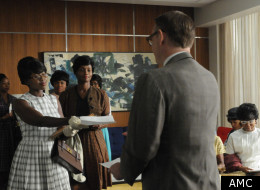
John Kifner's 1966 Reporting Lives On
It was comforting to read in Thursday’s Times that my colleague, John Kifner, did not remember writing a story that was recreated in a current segment of Mad Men.
Kifner is 70; I am two years older. We’re not losing it, just yet. Journalists have prodigious memories for names, faces, details, quotes. It’s what we do. I sometimes tell people that I remember exactly what was said, and stand by my version. It’s a professional skill, like picking up the spin of a curveball, or being able to write code. But we are not infallible. A writer for Mad Men used quotes from an article by Kifner in 1966, which described protestors confronting an ad agency after high-paid jerks threw water balloons down on them. It’s a great example of art borrowing from real life. But Kifner,did not recall the story. He covered so many demonstrations, as a young reporter that they tend to blur, or vanish. It can happen. Let me tell you about covering the 1993 World Series in Toronto, when I got a call in my hotel room from the Obituary desk at the Times. Norman Vincent Peale had just died, and they were using my obit on the famous preacher and writer. That’s nice, I said. But I never wrote one. I had covered religion from 1976 through 1980, and could remember my two conversations with Archbishop Oscar Romero of El Salvador in 1979, visits to the Lubavitcher center in Brooklyn, documenting the political rise of the evangelicals. But I insisted I never wrote a Peale obit. Yes, you did, the editor said. You typed your name on the top of every page and we are in the process of transcribing it into the computer system. They downloaded the advance obit to me, and I read it, and a few details sounded familiar. I had a vague memory of walking down Fifth Ave. and seeing the church on the west side of the street, and somehow I recalled benign weather. But other than that, the obit does not revive any other memories of my research or writing. I bet Kifner could recite the names of guides he trusted to get him through some hot spots in wars and riots all over the world. And why the outbursts happened. We go out there and report a zillion details, and decades later we remember many of them. Just not all. What is cool is that a contemporary script writer sees a John Kifner article from 1966, and recognizes the urgency and the truth in it.
Altenir Silva
3/30/2012 07:10:42 am
I saw the scene on Mad Men. I've not read the story by John Kifner. I liked very much of your text. Congratulations. Have a good weekend.
George Vecsey
3/30/2012 09:53:16 am
Estimado amigo Altenir, igualmente. George 10/3/2012 08:23:56 pm
I am extremely impressed thanks for sharing all information. It is a great post for the people to get the proper information.
Bruce Karp
4/1/2012 04:03:14 am
Great article today in the NY Times about the Mets' 50th anniversary (though isn't it actually their 51st season, but I digress...). Though I expect a great deal of pain this year, I will endeavor to maintain my status as a true fan (no jumping on any regular winners' bandwagons for me) through thick and thin, which is the very essence of a Mets fan. 10/9/2012 02:16:53 am
On the Net, graduate can get pre written essay papers, but some papers contained many mistakes, so I want to advise you the best firm I have worked with, where highly qualified staff is ready to aid you, so don’t hesitate and buy critical analysis essays. 3/31/2013 08:40:32 pm
I did not know these things you wrote in this post. But I am happy that I know these things now. So thanks for informing me. 3/31/2013 08:43:04 pm
Thanks a lot for the information, I found it really helpful. I will use it in a report I am doing for school if you don't mind, I will cite you anyway. 5/14/2013 01:13:19 am
I have landed on a creative and informative blog at last. Thank you so much for your sharing as it has provided a very deep understanding about the life and experience of journalists. All I can say is that you have understood the meaning and have a very good knowledge. Keep up your good work. 5/23/2013 09:29:10 pm
It is not easy having a Thyroid Disease or living with somebody that has a Thyroid Disease. But, as in my speech ...it is all about understanding and awareness. 5/28/2013 12:05:17 am
It’s a great example of art borrowing from real life. Comments are closed.
|