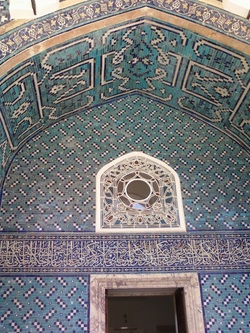
Prayer Wall/ Photo by George Vecsey
How could we have waited so long to visit Turkey? My overall impression of Istanbul was of overlapping cultures and tastes, centuries of civilizations. We were touched by amplified prayers wafting through this huge city, summoning worshippers to the mosques at mid-day.The windowsill in our hotel had a tiny sticker with an arrow pointing toward Mecca, making it easier for travelers to pray. At the same time, life went on, with people dressing and apparently living their varied fashions. We love cities. We took trams and ferries the way we take the subway or commuter train in New York. We found succulent small plates of appetizers -- mezze -- everywhere, but I have to say, our best meal was at the Istanbul Museum of Modern Art, a great airy space alongside the Bosphorus, with stimulating contemporary exhibitions. And I found a great bookstore near the ferry in Kadikoy, with soccer books by Franklin Foer and Simon Kuper, translated into Turkish. One thing I did not do was take an anotated walk around the neighborhood featured in My Name Is Red, the compelling novel by Orhan Pamuk (please enjoy the Updike review from 2001), which takes place near the Galata Tower. Next time. For sheer reading pleasure, please enjoy the current essay by Pamuk on the drying-up of the Bosphorus. , We went to the Istanbul Archaeological Museum, expecting history and we encountered something close to literature. One stele, or marker, contained a tribute to a Roman captain, Iulius Callineicos, from the third century, C.E. “Greetings passerby! Callineicos, you have set sail to the limits of Lethe (the mythical river of forgetfulness), having survived many fierce tempests. Still the sea did not swallow you in its depths, [but] the earth has wiped you from the face of the earth, you who wanted to take after your brother Calligonos, who left long ago from the face of the earth. The decision of the Fates (Moirae) was thus: Here lies Iulius Callineicos, captain.” Callineicos was sent by one great civilization; his service is still noted in the heart of another great civilization. 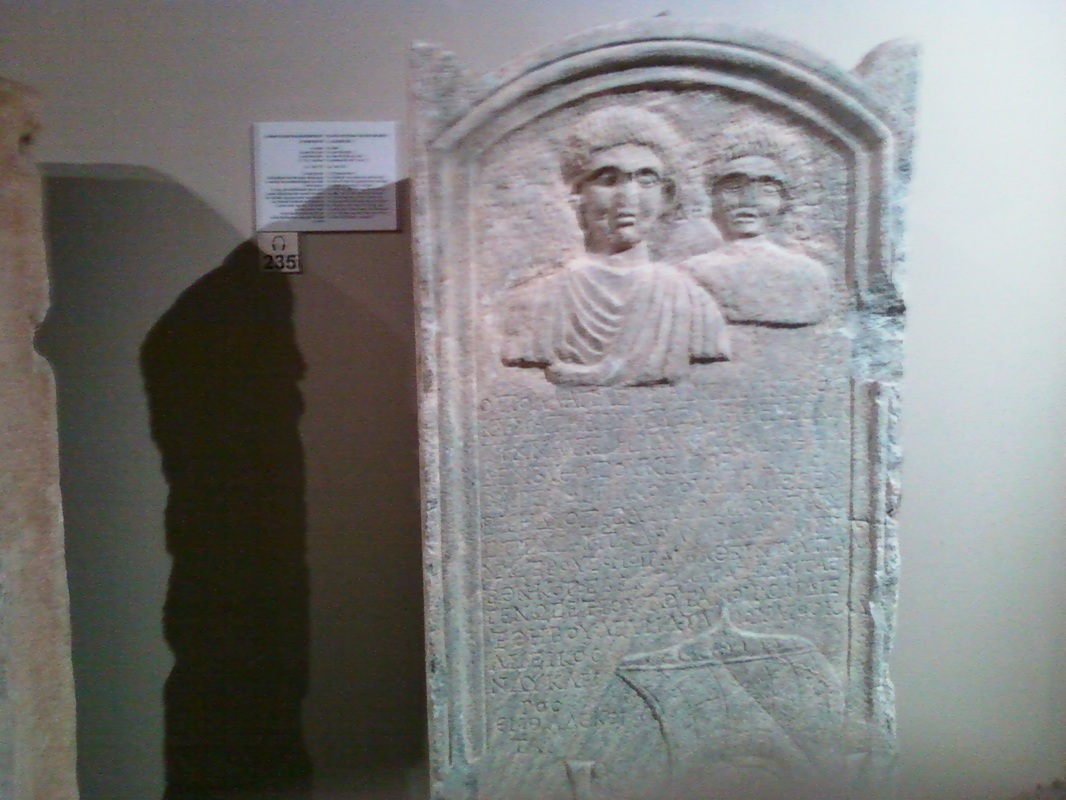
Stele of Callineicos in Archaeology Museum/ Photo by George Vecsey
Gene Palumbo
10/19/2012 08:34:37 am
Just wanted to alert you all to George's column in the N.Y. Times: "Yankees’ Old Ways Catch Up to Them" http://www.nytimes.com/2012/10/20/sports/baseball/yankees-old-ways-catch-up-with-them.html
Brian Savin
10/19/2012 09:52:28 am
Just saw it...he's certainly back!
Brian Savin
10/20/2012 02:42:37 am
Plenty of time to get to the travelog stuff, but I just reread the Yankees piece again in today's Times and I think it is not only loaded with perspective stuff for us fans but real serious, practical stuff for management. I know the Steinbrenner boys will read it....I hope they REALLY read it (what our school teachers used to call "reading for comprehension")!
Altenir Silva
10/20/2012 03:29:42 am
Dear George,
George Vecsey
10/20/2012 04:52:34 am
Dear Altenir: Thanks so much. It sounds very touristy to say that, but the fact is they had a chef who prepared a large portion of salmon and potatoes and other vegetables, hot and seasoned, with a great view of the water.
Altenir Silva
10/20/2012 05:13:03 am
Dear George, 10/22/2012 06:22:13 am
George, thanks for impressions of Turkey. The news focuses on the Syrian situation, seldom mentioning this multicultural country that represents so many religions in relative peace. 10/31/2012 04:22:49 am
George 1/28/2013 02:46:38 pm
I like the way you explained the difficult topic with such details. This is something I have been exploring about for a long time and you really provided all details of this topic. Comments are closed.
|